Author: Julia Shipman

What am I Reading? The Role of Housing for Health in an Era of Environmental Change

What am I Reading? The Role of Housing for Health in an Era of Environmental Change

If you’re interested in contributing a short What Am I Reading post, we’d love to hear from you! Email us at cache@colorado.edu.


Post written by Alex Mikulas, PhD, University of Colorado-Boulder 

Introduction 

Housing is an important protective force and has important impacts on health and wellbeing , especially during rapid environmental change and disasters. Due to the health, economic, and social vulnerabilities of aging adults, housing may serve an especially important role in shaping their health and wellbeing. In both research and policy settings, it is critical to identify how several social and material features of housing shape health risks and outcomes for aging adults before, during, and after environmental change and disasters.  

From housing to health 

One framework outlined by health and housing scholars Carloyn Swope and Diana Hernández identifies four features of housing that impact health outcomes(2019). Housing conditions are the characteristics of a home itself that shape health and wellbeing directly – such as the protective power of air conditioning or the danger of mold exposure. Housing consistency is the long- and short-term experiences of housing that have major health implications over time, such as residential instability, crowding, or chronic homelessness. Housing costs are household financial aspects of housing. These include factors beyond affordability, such as how mortgage status or tenant protections may impact economic well-being after a job loss or weathering a medical emergency. Finally, the larger housing context – a home’s neighborhood characteristics and physical location – shapes access to health and emergency services, and important local amenities. 

Health scholars Jennifer Molinsky and Anne Forsyth introduce timing as another important consideration for how housing shapes climaterelated health risks (2023). Even before a disaster or acute environmental change, housing shapes who is at higher risk of exposure. During an event, housing influences how sensitive someone might be by providing varying degrees of shelter and protection from immediate danger.

Finally, after disaster, housing shapes the recovery and resiliency of residents, serving as an economic asset, or as a financial liability. In an era of increasing environmental change and disasters, a comprehensive conceptual approach to housing – its layered dimensions and their timing – is necessary for addressing the health needs of aging adults. 

Aging adults, housing, and health before, during, and after disaster 

The three examples below use these frameworks to illustrate how different features of housing influence health and wellbeing, particularly for aging adults.  

The housing market shapes the risk of exposure to environmental change and disasters before they occur 

The housing market is a primary force in shaping vulnerability to future disasters and environmental change by placing people into more or less risky locations. Take renters and rental markets, for example. In urban landscapes, affordable rental housing options are more likely to be located in high climate-risk areas of cities, and this pattern is expected to increase (Buchanan et al. 2020; JCHS 2022). Because lower income renters have fewer options for affordable housing in low-risk locations and limited economic resources to relocate, the limits of the rental market structure low-income and other disadvantaged populations in higher-risk areas.  

For homeowners, another pattern is emerging. Due to social change and emerging risk disclosure policies, home buyers have a growing awareness of climate risk and are altering their mobility and purchasing decisions. Home prices and prized residential locations are now partly determined by their resilience to disasters and environmental risks in a process called climate gentrification (Thompson et al. 2023).  At the same time, high-risk regions are among the fastest growing on the United States, driven in large part by retirees moving to warmer areas (Schuetz 2024). More broadly, some researchers believe that many homes are overvalued due to the potential risk of climate-related market changes (Gourevitch et al. 2023; Gourevitch and Kousky 2025). Federal mortgage buyout programs exist to help residents relocate from high-risk areas, but the programs are unevenly applied across states and social groups (Shi et al. 2022). More research is needed to determine if patterns of weather-related migration will begin to place “climate handcuffs” on aging adults wishing to sell homes in high-risk or less desirable places. 

Finally, as discussed in a CACHE post by Jenna Tipaldo, those who wish to age in their longstanding residence are often doing so in areas at greater risk to wildfire and other disasters (Winkler and Mockrin 2025). Personal preference for aging in place, as well as constraints imposed by the difficulty in selling homes in risky locations, means that populations are aging faster and clustering in high-risk locations compared to lower-risk places. The market and social features of housing – cost, changing preferences, and the desire to age in place – are stratifying the risk of environmental change and disaster by both age and socioeconomic status.  

During a disaster, physical shelters shape the experience and severity of environmental change and disasters 

Housing characteristics and materials – the sheltering capacity of a home – are critically important for shaping the immediate health impact of a disaster or environmental change. Take, for example, the importance of home heating and cooling during extreme temperatures. A Toronto-based research team found that during periods of extreme heat, living in a nursing home with air conditioning lowered the risk of death compared to living in a nursing home without air conditioning (Katz et al. 2025). Other studies find similar evidence for the protective capacity of air conditioning during extreme heat (Sera et al. 2020). 

On the opposite end of the spectrum, old or sub-standard housing stock is inefficient, difficult, and expensive to heat during extreme cold. For example, mobile homes are at greater risk of disaster and have minimal sheltering capabilities compared to other structures (Rumbach, Sullivan, and Makarewicz 2020). Meeting energy costs (Hernández 2013) and the disruption of utility services (Peterson et al. 2024) are growing concerns as energy costs increase and as energy grids are tested during extreme temperatures. In a poignant illustration of the basic importance of housing as shelter, one CACHE demonstration project details how deaths of vulnerable – likely unhoused – New York City residents increase on days with extreme heat. 

Ultimately, because older populations are much more physiologically vulnerable to environmental conditions, and only slightly more likely to seek shelter outside the home when disaster strikes (Behr and Diaz 2013; Malik et al. 2018), the sheltering capacity of their homes is paramount as disasters and extreme weather become more common (Smith and Swacina 2017). And yet, the physical limitations and fixed incomes of many aging adults present challenges to retrofitting existing homes with new, climate resilient features like air conditioning, water filtration, and fire mitigation (Forsyth and Molinsky 2021) 

After change and disaster, the economics of housing shape recovery and adaptability 

Finally, for homeowners, disasters can often result in the loss of their largest economic assets (Tagtachian and Balk 2023). Homes are often under-insured or have no coverage at all for increasingly common disasters like wildfires or floods. Rising insurance premiums make formal protection out of reach for many. Also, disasters can result in a cascadeof economic and health risks if households do not have sufficient coverage or independent wealth to rebuild or start anew (Rhodes and Besbris 2022). 

Take for example, the 2024 Hurricane Helene flooding in North Carolina. Flooding damaged ordestroyed mortgaged homes, resulting in homeowners being responsible for payments on unusable assets. In many cases, these households relocated to substandard temporary housing that is vulnerable to the elements, or they continued to live in their flood-damaged homes. Such housing conditions increase health risks related to extreme temperature, toxic debris and mold exposure, and substandard living conditions (Albert 2026). The situation is similar in the immediate wake of the 2025 Los Angeles urban wildfires (Borunda 2026; Copley 2026). Because impacted households may be unable to sell damaged or lost homes at reasonable prices, they may divert any financial resources away from health-promotion and towards rent or repair efforts, all while covering outstanding mortgages.  

As for renters, inattentive or predatory landlords may neglect to make their housing units climate resilient and delay timely repairs after a disaster. Many renters lack formal protections against such negligence, and against evictions and rent hikes in the aftermath of disasters (Lee and Van Zandt 2019). Often, disaster or rapid environmental change displaces renter households across town or across the country. Sudden or extreme changes in housing circumstances have extensive health impacts due to healthcare disruptions, loss of community and social support, extreme stress and mental health challenges, and more (Fussell and Lowe 2014; Tapsell and Tunstall 2008). There are greater impacts of displacement on aging populations (McDermott et al. 2019; Prohaska and Peters 2019). 

Final remarks 

The complex and layered features of housing – from market forces and financial relationships to the structure’s characteristics and location – shape health and wellbeing before, during, and after environmental change and disasters. Because of aging people’s additional vulnerabilities in health, mobility, and finances, housing is and will remain a crucial element for how they weather a changing and more disaster-prone future. Researchers and policy makers should focus attention on particular and relevant features of housing and health, and their occurrence along the timeline of environmental change and disasters. Such efforts will help uncover unknown risks and possible adaptive solutions to better support and protect the growing and increasingly climate-vulnerable aging population. 

Additional conceptual resources 

  • Housing and health – (Meltzer and Schwartz 2016; Taylor 2018) 
  • Climate gentrification – (Thompson et al. 2023) 
  • Aging in place – (Forsyth and Molinsky 2021) 
  • Rebuilding homes after disaster – (Rhodes and Besbris 2022) 
  • NPR and NYT coverage of emerging impacts of Hurricane Helene and the Los Angeles urban wildfires –  (Albert 2026; Borunda 2026; Copley 2026; Kaysen 2025) 


References 

Albert, Gerard III. 2026. “Winter Is Tough on People Still Living in RVs after Helene in Asheville, N.C.” NPR, January 27. 

Behr, Joshua G., and Rafael Diaz. 2013. “Disparate Health Implications Stemming From the Propensity of Elderly and Medically Fragile Populations to Shelter in Place During Severe Storm Events.” Journal of Public Health Management and Practice 19:S55. doi:10.1097/PHH.0b013e318297226a. 

Borunda, Alejandra. 2026. “The Long-Term Health Impacts from the LA Wildfires Are Just Becoming Clear.” NPR, January 14. 

Buchanan, Maya K., Scott Kulp, Lara Cushing, Rachel Morello-Frosch, Todd Nedwick, and Benjamin Strauss. 2020. “Sea Level Rise and Coastal Flooding Threaten Affordable Housing.” Environmental Research Letters 15(12):124020. doi:10.1088/1748-9326/abb266. 

Copley, Michael. 2026. “California Fire Victims Say Fighting with Insurance Companies Has Delayed Rebuilding.” NPR, January 13. 

Forsyth, Ann, and Jennifer Molinsky. 2021. “What Is Aging in Place? Confusions and Contradictions.” Housing Policy Debate 31(2):181–96. doi:10.1080/10511482.2020.1793795. 

Fussell, Elizabeth, and Sarah R. Lowe. 2014. “The Impact of Housing Displacement on the Mental Health of Low-Income Parents after Hurricane Katrina.” Social Science & Medicine 113:137–44. doi:10.1016/j.socscimed.2014.05.025. 

Gourevitch, Jesse D., and Carolyn Kousky. 2025. “New Homeowners Insurance Data Reveals Insights into Market Trends and Suggests Future Research Needs.” Risk Management and Insurance Review 28(2):324–38. doi:10.1111/rmir.70010. 

Gourevitch, Jesse D., Carolyn Kousky, Yanjun (Penny) Liao, Christoph Nolte, Adam B. Pollack, Jeremy R. Porter, and Joakim A. Weill. 2023. “Unpriced Climate Risk and the Potential Consequences of Overvaluation in US Housing Markets.” Nature Climate Change 13(3):250–57. doi:10.1038/s41558-023-01594-8. 

Hernández, Diana. 2013. “Energy Insecurity: A Framework for Understanding Energy, the Built Environment, and Health Among Vulnerable Populations in the Context of Climate Change.” American Journal of Public Health 103(4):e32–34. doi:10.2105/AJPH.2012.301179. 

JCHS, Joint Center for Housing Studies of Harvard University. 2022. America’s Rental Housing 2022. Joint Center for Housing Studies of Harvard University. https://www.jchs.harvard.edu/sites/default/files/reports/files/Harvard_JCHS_Americas_Rental_Housing_2022.pdf. 

Katz, Gabrielle M., Kevin A. Brown, Vasily Giannakeas, and Nathan M. Stall. 2025. “Air Conditioning in Nursing Homes and Mortality During Extreme Heat.” JAMA Internal Medicine. doi:10.1001/jamainternmed.2025.6595. 

Kaysen, Ronda. 2025. “L.A. Faces Pressure From Wealthy Residents as Pacific Palisades Rebuilds.” The New York Times, February 4. 

Lee, Jee Young, and Shannon Van Zandt. 2019. “Housing Tenure and Social Vulnerability to Disasters: A Review of the Evidence.” Journal of Planning Literature 34(2):156–70. doi:10.1177/0885412218812080. 

Malik, Sidrah, David C. Lee, Kelly M. Doran, Corita R. Grudzen, Justin Worthing, Ian Portelli, Lewis R. Goldfrank, and Silas W. Smith. 2018. “Vulnerability of Older Adults in Disasters: Emergency Department Utilization by Geriatric Patients After Hurricane Sandy.” Disaster Medicine and Public Health Preparedness 12(2):184–93. doi:10.1017/dmp.2017.44. 

McDermott, -Levy Ruth, Ann Marie Kolanowski, Donna Marie Fick, and Michael E. Mann. 2019. “Addressing the Health Risks of Climate Change in Older Adults.” Journal of Gerontological Nursing 45(11):21–29. doi:10.3928/00989134-20191011-04. 

Meltzer, Rachel, and Alex Schwartz. 2016. “Housing Affordability and Health: Evidence From New York City.” Housing Policy Debate 26(1):80–104. doi:10.1080/10511482.2015.1020321. 

Molinsky, Jennifer, and Ann Forsyth. 2023. “Climate Change, Aging, and Well-Being: How Residential Setting Matters.” Housing Policy Debate 33(5):1029–54. doi:10.1080/10511482.2022.2109711. 

Peterson, Sara K. E., Susan Spierre Clark, Michael A. Shelly, and Samantha E. M. Horn. 2024. “Assessing the Household Burdens of Infrastructure Disruptions in Texas during Winter Storm Uri.” Natural Hazards 120(8):7065–7104. doi:10.1007/s11069-024-06480-w. 

Prohaska, Thomas R., and Karen E. Peters. 2019. “Impact of Natural Disasters on Health Outcomes and Cancer Among Older Adults.” The Gerontologist 59(Supplement_1):S50–56. doi:10.1093/geront/gnz018. 

Rhodes, Anna, and Max Besbris. 2022. Soaking the Middle Class: Suburban Inequality and Recovery from Disaster. Russell Sage Foundation. 

Rumbach, Andrew, Esther Sullivan, and Carrie Makarewicz. 2020. “Mobile Home Parks and Disasters: Understanding Risk to the Third Housing Type in the United States.” Natural Hazards Review 21(2):05020001. doi:10.1061/(ASCE)NH.1527-6996.0000357. 

Schuetz, Jenny. 2024. “How Will US Households Adjust Their Housing Behaviors in Response to Climate Change?” Real Estate Economics 52(3):596–617. doi:10.1111/1540-6229.12486. 

Sera, Francesco, Masahiro Hashizume, Yasushi Honda, Eric Lavigne, Joel Schwartz, Antonella Zanobetti, Aurelio Tobias, Carmen Iñiguez, Ana M. Vicedo-Cabrera, Marta Blangiardo, Ben Armstrong, and Antonio Gasparrini. 2020. “Air Conditioning and Heat-Related Mortality: A Multi-Country Longitudinal Study.” Epidemiology 31(6):779. doi:10.1097/EDE.0000000000001241. 

Shi, Linda, Anjali Fisher, Rebecca M. Brenner, Amelia Greiner-Safi, Christine Shepard, and Jamie Vanucchi. 2022. “Equitable Buyouts? Learning from State, County, and Local Floodplain Management Programs.” Climatic Change 174(3):29. doi:10.1007/s10584-022-03453-5. 

Smith, David A., and Paul J. Swacina. 2017. “The Disaster Evacuation or Shelter-in-Place Decision: Who Will Decide?” Journal of the American Medical Directors Association 18(8):646–47. doi:10.1016/j.jamda.2017.05.004. 

Swope, Carolyn B., and Diana Hernández. 2019. “Housing as a Determinant of Health Equity: A Conceptual Model.” Social Science & Medicine 243:112571. doi:10.1016/j.socscimed.2019.112571. 

Tagtachian, Daniela, and Deborah Balk. 2023. “Uneven Vulnerability: Characterizing Population Composition and Change in the Low Elevation Coastal Zone in the United States with a Climate Justice Lens, 1990–2020.” Frontiers in Environmental Science 11. doi:10.3389/fenvs.2023.1111856. 

Tapsell, S. M., and S. M. Tunstall. 2008. “‘I Wish I’d Never Heard of Banbury’: The Relationship between ‘Place’ and the Health Impacts from Flooding.” Health & Place 14(2):133–54. doi:10.1016/j.healthplace.2007.05.006. 

Taylor, Lauren A. 2018. Housing And Health: An Overview Of The LiteraturePolicy Brief. Health Affairs Health Policy Brief. https://www.healthaffairs.org/do/10.1377/hpb20180313.396577/full/. 

Thompson, Joshua J., Robert L. Wilby, John K. Hillier, Richenda Connell, and Geoffrey R. Saville. 2023. “Climate Gentrification: Valuing Perceived Climate Risks in Property Prices.” Annals of the American Association of Geographers 113(5):1092–1111. doi:10.1080/24694452.2022.2156318. 

Winkler, Richelle, and Miranda H. Mockrin. 2025. Aging and Wildfire Risk to Communities. EIB-284. Washington, D.C: U.S. Department of Agriculture, Economic Research Service. doi:10113/9015828,%2010.32747/2025.9015828.ers. 


Continue reading

Behavioral Response to Extreme Temperatures among the Elderly

Behavioral Response to Extreme Temperatures among the Elderly

Investigators:

Kathryn Grace, Sarah Flood, David Van Riper

Funding:

CACHE demonstration project; NIA-UMN LCC pilot grant (P30AG066613)

Data sources:

  • Time use data (2003-2024) from the American Time Use Survey (ATUS). Data on how people spend their time are collected throughout the year and across the United States using daily time diaries. Through linkage with the monthly Current Population Survey (CPS), county of residence is available for a subset of ATUS respondents.
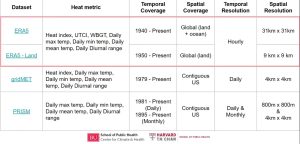
  • Daily temperature variables for the contiguous US from GridMET.

Measures:

  • Time use measurements
    1. Daily totals of the amount of time spent in various activities (e.g., sleep, exercise), with others, inside, and outside
    2. Data are collected throughout the year
  • Temperature measurements
    1. Mean, minimum, and maximum of the GridMET daily temperature variables aggregated to the county scale.

Project Summary:

Extreme temperature events represent the leading cause of weather-related mortality in the U.S., and age is a key risk factor for severe health outcomes (e.g., death, hospitalizations) from exposure to extreme temperatures. Older adults who are economically disadvantaged, of color, and have underlying health conditions or mobility limitations are most severely impacted by extreme temperatures, exacerbating health disparities. Behavior is a significant pathway through which social inequality leads to health disparities. Despite consensus that behavioral modifications can ameliorate the deleterious health outcomes for older adults caused by extreme temperatures, there is a dearth of interdisciplinary, scientifically based, rigorous studies of older adult behavior and temperature, especially during extreme temperature events.

This project examines variability in older adult behavior across the temperature spectrum (i.e., temperature-behavior relationship), focusing on both hot and cold seasons and extreme temperatures within those seasons. A socioecological framework guides this investigation of multilevel and heterogeneous impacts of temperature on health behavior. The results will inform interventions to reduce vulnerability and save lives.

To accomplish the proposed work, the project team will build a unique dataset to examine individual-level behavior—protective and deleterious—under varying temperature conditions. The dataset combines information on (1) daily behavior and well-being from the 2003-2024 American Time Use Survey; and (2) day- and location-specific temperature data. This novel dataset enables analyses of the determinants of behavioral responses to temperature changes. We will estimate the temperature-behavior relationship and assess variation in vulnerability by age, socioecological characteristics, and factors related to exposure and assess the significance of time and place for the impact of temperatures on behavior.

Outputs:

Presentations, future publications, and code to construct the dataset for analysis.

Continue reading

Triply robust approach to evaluate the health impacts of extreme weather events

Triply robust approach to evaluate the health impacts of extreme weather events

Link to code

Click here

Date: October 2025


Authors/Creators/ Team Members:  Lingzhi Chu, Kai Chen

Specific purpose of code: This code is designed to evaluate the relationships between extreme weather events and health outcomes.

General Application: The code was first designed to evaluate the mortality risk associated with flood in the contiguous United States (https://doi.org/10.1038/s41467-025-58236-0). The code could be used with other “pulse” events (e.g., extreme weather events) or other health outcomes (e.g., hospital visits).

How does or could this code allow researchers to assess research questions related  to aging or life course?: This code could be used for any specific age group or subsets by age.

Data sets used: 

  • Population, socioeconomic, or health data: Mortality data from CDC National Center for Health Statistics.
  • Climate, weather, disaster or environment data: NOAA Storm Events Database.

Are all the data publicly available or are some restricted-access? NOAA Storm Events Database is publicly available. The monthly county-level cause specific mortality data are protected and are not publicly available due to data privacy laws but can be requested from the National Center for Health Statistics (https:// www.cdc.gov/nchs/index.htm).

Links to data: https://github.com/CHENlab-Yale/Flood_mortality_US

Coding Language:  R 

Tools and Packages used:  N/A

Output(s): https:// doi.org/10.1038/s41467-025-58236-0

Spatial extent: No restriction

Temporal extent: No restriction

Published papers that use this code:

Chu, Lingzhi, Joshua L. Warren, Erica S. Spatz, Sarah Lowe, Yuan Lu, Xiaomei Ma, Joseph S. Ross, Harlan M. Krumholz, and Kai Chen. “Floods and cause-specific mortality in the United States applying a triply robust approach.” Nature Communications 16, no. 1 (2025): 2853.

DOI: https://doi.org/10.1038/s41467-025-58236-0

Continue reading

Using Health and Retirement Study Data: A Guide for New Users

Using Health and Retirement Study Data: A Guide for New Users

Link to code

Click here

Authors/Creators/ Team Members: Amanda Sonnega, with statistical code provided by Ryan McCammon, Chichun Fang, Christopher Greene, and Sergio Martinez.

Specific purpose of code: This code provides code examples in four programming languages for working with the Health and Retirement Study. A dozen examples provide sample code demonstrating how to merge/join various types of data files at the respondent and household levels, combine household members, summarize information from a file that may have multiple rows per respondent, combining strata (for variance estimation), and to conduct analyses such as two-way tables and logistic regression.

General Application: This code provides code examples for working with the Health and Retirement Study. While intended for use with the HRS files specified, the code could be adapted and applied to other files within the HRS or other longitudinal surveys with individual-level responses and survey weights and strata.

How does or could this code allow researchers to assess research questions related  to aging or life course?: The data for which this sample code was created for, the Health and Retirement Study, is commonly used by researchers to study older adults in the United States.  The survey is nationally representative of the U.S. population over age 50 and contains many questions related to aging as well as modules that capture early life exposures.

Data sets used:

  • Population, socioeconomic, or health data: Health and Retirement Study (HRS)
  • Climate, weather, disaster or environment data: N/A

Are all the data publicly available or are some restricted-access?  Some HRS data is publicly available and researchers can apply for access to restricted data.

Links to data: https://hrsdata.isr.umich.edu/data-products/public-survey-data

Coding Language: R, SAS, STATA, SPSS

Tools and Packages used

  • R: srvyr, survey, haven, knitr, kableExtra, tidyverse
  • STATA: svy, merge
  • SAS: data MERGE, proc SURVEYLOGISTIC, proc SURVEYFREQ
  • SPSS: MATCH FILES, VARSTOCASES, SUMMARIZE, CSPLAN ANALYSIS, CSLOGISTIC

Output(s): Tables, datasets (joined/merged/stacked, reshaped)

Spatial extent: United States 

Temporal extent: 1992-2022 (span of the HRS data)

Continue reading

Aging under Climate Stress: How Extreme Temperatures Shape Multi-System Biological Aging

Aging under Climate Stress: How Extreme Temperatures Shape Multi-System Biological Aging

Investigators:

Eun Young Choi, Jennifer A. Ailshire, and Eileen M. Crimmins

Funding:

NIA R61AG086854 (CACHE)

Data sources:

  • Health and Retirement Study (HRS). This project utilizes sensitive and restricted data from the HRS. Sensitive data include biomarker measures used to calculate our primary outcome, biological age, drawn from the 2016 Venous Blood Study and the 2014 and 2016 Biomarker data files. Restricted data include respondents’ geographic identifiers and contextual data from the HRS Contextual Data Resource products. Researchers must apply for access to these datasets through the HRS website [https://hrs.isr.umich.edu].
  • GridMet. Daily meteorological variables (e.g., temperature, humidity, wind speed) for the contiguous US [https://climatologylab.org/gridmet.html].
  • Environmental Protection Agency. Daily concentrations of PM₂.₅ and ozone (O₃) across the contiguous US [https://epa.gov/hesc/rsig-related-downloadable-data-files].
  • Centers for Disease Control and Prevention. Social Vulnerability Index that ranks US census tracts based on 15 social factors that may adversely affect communities that encounter disasters [https://atsdr.cdc.gov/place-health/php/svi/index.html].
  • National Neighborhood Data Archive US census tract-level cooling/warming amenities (e.g., public buildings and private low-cost businesses) and national land cover database [https://nanda.isr.umich.edu].

Measures:

  • Health Measures: Biological age is estimated using the “Expanded Biological Age” measure, based on 22 clinically relevant blood-based biomarkers. This measure captures functioning across physiological systems (e.g., cardiovascular, metabolic, renal, immune). Biological age is further regressed on chronological age, and the residual is used as an indicator of biological age acceleration (value > 0) or deceleration (< 0), expressed in years.
  • Aging Measures: The analysis includes US adults aged 56 years and older. We include chronological age a covariate in the model.
  • Climate Measures: Number of extreme heat and cold days; more details below.
  • Source of Susceptibility Measures: We draw on multiple datasets to capture potential socioeconomic factors contributing to susceptibility. At the community level, variables include the Social Vulnerability Index, neighborhood social capital, availability of cooling and warming amenities, and land cover characteristics. At the familial or individual level, measures include household income and wealth, educational attainment, personal social networks, health-related behaviors, and housing type and physical conditions.

Project Summary:

Extreme heat and cold are increasingly associated with morbidity and mortality in aging populations. However, little is known about how these exposures affect biological aging, an important process that precedes the onset of chronic diseases and functional decline. The physiological burden of temperature extremes may not manifest immediately as clinical conditions but instead silently accelerate biological deterioration. Thus, examining biological aging and system-specific damage at an intervenable stage holds substantial public health significance for mitigating long-term health risks from climate stress. Animal studies provide strong evidence that heat and cold stress induce biological decline linked to aging. However, it remains unclear whether these well-characterized biological impacts of heat and cold in model systems translate to human populations. Existing human studies are often restricted to small, regionally selective samples, lacking sociodemographic and geographic representation.

This project is among the first to examine how outdoor extreme temperatures are associated with biological age acceleration measured with 22 biomarkers. Leveraging data from the nationally representative sample of US community-dwelling older adults, we examine whether older adults living in areas with more extreme heat or cold days have greater biological age acceleration and identify which physiological systems are most affected. We assess short-term exposures over the 7 days prior to blood collection for acute biological responses and long-term exposures over a 10-year period for the effects of chronic climatic conditions on biological age acceleration. To disentangle system-specific effects, we also test associations across each biomarker reflecting components (e.g., cardiovascular, immune) of biological age. Further, we identify high-risk subgroups through a novel neural network–based model (regression-guided neural networks; ReGNN [https://doi.org/10.48550/arXiv.2409.13205]) developed by our team. ReGNN complements traditional regression by capturing complex interactions across multiple sources of heterogeneity and generates individual-level susceptibility scores.

On the creation of the weather variables:

Outdoor temperature exposure is measured using the Heat Index and Wind Chill Index that incorporate air temperature with humidity or wind speed, respectively, to reflect temperature as experienced by the human body. Because no single epidemiologic threshold is universally accepted, we adopt a multi-pronged approach to define an “extreme heat and cold.” First, we apply absolute thresholds from the National Weather Service: for heat, ≥80°F (Caution), ≥90°F (Extreme Caution), ≥103°F (Danger); for cold, ≤0°F (Mild), ≤-10°F (Moderate), ≤-25°F (Severe). Second, we apply relative thresholds to account for physiological adaptations and regional acclimatization. Extreme days will be defined as those exceeding the 90th, 95th, 99th percentile (heat) or below the 10th, 5th, 1st percentile (cold) of tract-specific historical index values (1979-1999), constrained to biologically relevant thresholds (Heat Index ≥ 79°F; Wind Chill ≤20°F). For each participant, we calculate the annual mean number of extreme days for two periods: (1) short-term exposure, from the day of blood collection (BC-day) to prior 7 days; (2) long-term exposure, from BC-day to prior 10 years. Residential mobility will be accounted for using cross-wave respondents’ census tract identifiers verified from biennial HRS surveys and self-reported moving month/year data.

Outputs:

Conference presentations, peer-reviewed publications, grant proposals, documented codes to integrate HRS datasets relevant to this work.

Continue reading

Air Quality and Pace of Aging among Older Adults in the United States

Air Quality and Pace of Aging among Older Adults in the United States

Investigators:

Arun Balachandran, Daniel W Belsky

Funding:

NIA R61AG086854 (CACHE)

Data sources:

Measures:

  • Health Measures: The Pace of Aging health measures used in the study is obtained from three blood biomarkers (HbA1c, C-reactive protein, cystatin-C), three physical assessments (diastolic blood pressure, peak-flow lung-function testing, waist circumference), and three functional tests (gait speed, balance, grip strength) available in the US Health and Retirement Study.
  • Aging Measures: Pace of Aging Age for all participants in HRS 2006-2016 who has at least two follow-ups of biomarker data (N=13, 358).
  • Climate Measures: Annual data of 5 exposure during 2002-16.

Project Summary:

Air pollution is emerging as a central public health threat to aging populations. Living in more polluted areas is associated with increased risk for a wide range of aging related diseases. There is emerging evidence that air pollution may accelerate the aging process itself, shortening healthy lifespans in already aging populations. Efforts are underway to reduce pollution and its harms. Metrics to monitor the impact of those efforts on population health are needed. Passively accumulated data such as hospitalizations for asthma or heart attacks are limited because they capture only the tip of the iceberg of latent morbidity caused by pollution. More sensitive and comprehensive measures are needed. If air pollution really does hasten the aging process, new methods to quantify the pace of biological aging could provide the answer.

The central hypothesis of this pilot proposal is that air pollution accelerates the pace of biological aging. We propose a one-year study to test this hypothesis and generate proof-of-concept for a method to monitor population health impacts of air pollution and efforts to reduce/mitigate it. Successful completion of this pilot study will position us to apply for R01 grants to expand our project to global scale, to develop an interactive toolkit for researchers and policymakers can use to evaluate how changes in air pollution levels will impact population aging, and to investigate the role of air pollution in social gradients in biological aging in the US.

Our pilot will analyze data from the US Health and Retirement Study (HRS), an ongoing longitudinal study of adults aged 50 and older and their spouses in the United States. HRS is ongoing since 1992. Survey data are collected every two years. Since 2006, biomarker data are collected every four years. Refresher panels are recruited periodically to replace study members who have died. The HRS has so far collected data on around 40,000 individuals, with roughly 20,00 participating at any given assessment wave. Our analysis will focus on a sample of 13,000 adults for whom we have previously conducted analysis to phenotype Pace of Aging, a longitudinal measurement of the rate of decline in the integrity of multiple bodily systems2. We will link Pace of Aging, sociodemographic, and morbidity and mortality data with small-area air pollution data within the HRS Contextual Data Resource (HRS-CDR) hosted within the Michigan Center for Demography of Aging (MiCDA) accessed via their Virtual Desktop Infrastructure (VDI). HRS-CDR is a collection of analysis-ready datasets that link HRS participant-level data with small-area characteristics relevant to health and wellbeing. Air pollution exposure data consist of average annual concentrations of PM 2.5 (mg/m3) and O3 (mg/m3) at the census-tract level for the period 2002-2016.

On the creation of the weather variables:

The air pollution data are integrated at the census-tract level, within the server of the Health and Retirement Study at Michigan Centre on Demography of Aging (MiCDA). The Virtual Data Enclave (VDE) supported by MiCDA gives the PM 2.5 (mg/m3) and O3 (mg/m3) at the census-tract level for the period 2002-2016, and the researchers made use of this.

Outputs:

  • Poster
  • Future publications and code

Continue reading

Effects of Outdoor Wildfire PM2.5 on Alzheimer’s Disease and Related Dementia

Effects of Outdoor Wildfire PM2.5 on Alzheimer’s Disease and Related Dementia

Investigators:

Jennifer Stowell, Chad Milando, and Greg Wellenius

Funding:

NIA R61AG086854 (CACHE)

Data sources:

Measures:

  • Health Measures: AD/ADRD ED visits and hospitalizations will be identified using the International Classification of Diseases versions 9 and 10.
  • Aging Measures: Age of event is recorded for all patients, and the analysis is restricted to persons aged at least 40 years.
  • Climate Measures: Daily WFS-specific PM2.5, heat, and relative humidity will allow us to examine un-biased associations between wildfire smoke and AD/ADRD. Meteorology will include multiple measures of temperature (i.e. absolute, heat index, wet bulb globe, etc.).

Project Summary:

We will examine the impact of exposure to WFS-specific PM2.5 on emergency department visits and hospitalizations for incident AD/ADRD or exacerbations of AD/. We will link population-weighted exposure, meteorology, and demographic variables to AD/ADRD events across the contiguous US for 2006-2023 using a large medical claims dataset. We will accomplish this using distributed lag nonlinear models (DLNM) and conditional Poisson regression. We will explore multiple lag lengths to account for delays in exposure effects. These analyses will be conducted using a case-control study design where each case is matched to non-case days within the same month, year, and on the same day of the week. This design inherently controls for all time invariant confounders, and all models will include terms for confounding variables such as temperature, relative humidity, and holidays. We will repeat our analyses stratifying on measures of individual and community-level social determinants of health (SDOH) using age, sex, and select ACS variables.

This research will help to increase our understanding of the environmental factors associated with AD/ADRD. Our results will provide actionable evidence for public health practitioners, clinicians, and policymakers in future efforts to mitigate the impacts of climate change on AD/ADRD. Our future research will build on these results and inform an R01 proposal to examine the potential synergistic impacts of multiple extreme weather events (i.e. wildfire, drought, heat, etc.) and mixtures of pollutants on AD/ADRD in US adults.

Outputs:

  • Poster presentations
  • Grant proposal
  • Code
  • Future publications

Continue reading

What am I Reading? A Life Course Approach to Brain Health in a Changing Climate

What am I reading? A Life Course Approach to Brain Health in a Changing Climate

If you’re interested in contributing a short What Am I Reading post, we’d love to hear from you! Email us at cache@colorado.edu

Written by Kelly Perry and Jenna Merenstein

Calling for an exposome-informed approach to brain health across the life course

Older adults are a key group at risk from climate-related threats, including extreme heat, poor air quality, and flooding (EPA). While these hazards were once primarily seen as risks to the heart and lungs, new evidence shows they also play a significant role in brain health, aging, and an increased risk of dementia (Jones et al 2025). We highlight two recent notable studies that explore the links between adverse environmental exposures and impaired brain health and aging, with a broad theme underscoring the need for more equitable, justice-centered, and exposome-informed community-level and occupational interventions to mitigating environment-related acceleration of neurocognitive aging across the life course.

What does a life course, exposome-informed, justice-centered approach to understanding and protecting brain health look like in practice? First, it demands investment in transdisciplinary research that bridges cognitive science, neuroscience, urban planning, and environmental science. Second, it requires designing policies that protect the brain from environmental harm at all stages of life—from improved maternal housing to urban greening strategies for older adults. Third, it calls for integrating neuroimaging-based measures of brain structure and brain function into exposome-focused studies to identify early biomarkers of environmental impact. Doing so would help identify targetable properties for future exposome-based intervention work and ultimately help slow or delay the negative effects of the exposome on neurocognitive aging.

A quick, non-exhaustive review of recent articles discussing adverse environmental exposures and impaired brain health, with implications for an exposome-informed life course approach

Jones and colleagues (2025) conducted an umbrella review and meta-analysis of longitudinal studies that investigated environmental risk factors for dementia, and identified that exposure to the following nine factors was associated with increased relative risk of all-cause dementia (dementia resulting from any combination of underlying causes) compared to those who were unexposed: fine particulate matter (PM; e.g., PM less than or equal to 2.5 µg/m3), particulate matter (PM less than or equal to 10 µg/m3), nitrogen dioxide (NO2), nitrogen oxides (NOx), carbon monoxide (CO), shift work, night shift work, chronic noise, and extremely low-frequency magnetic fields (ELF-MF). They also highlighted community-level factors that were associated with a lower relative risk for dementia, such as neighborhood greenness. Regarding specific types of dementia, Jones and colleagues found the following factors were associated with increased relative risk of dementia of the Alzheimer’s type: PM2.5, ELF-MF, sulfur dioxide (SO2), chronic noise, and pesticides. Similarly, PM2.5, PM10, and chronic noise were associated with increased relative risk of vascular dementia.

Canning and colleagues (2025) followed people from midlife to older age (43–69 years) to study how long-term exposure to air pollution affects the brain. They looked at common pollutants such as PM2.5, PM10, and nitrogen oxides (NOx), and measured cognitive thinking skills and acquired brain scans (i.e., structural magnetic resonance imaging, or MRI). A strength of this study is its long follow-up period and inclusion of adults over 65—an age group that is growing quickly worldwide but often excluded from studies of environmental exposure and neurocognitive aging. The team found that people exposed to more air pollution in mid-to-late life had lower cognitive performance, slower thinking speed, and greater age-related decreases in brain volume. Compared to individuals with lower exposure to NO2, NOx, and PM10, higher exposure to these pollutants was linked to larger brain ventricles and smaller hippocampal volume—and these changes are tied to memory abilities and overall brain health.

Interestingly, the team did not observe links between environmental exposures and measures of verbal memory, or between white matter hyperintensities (a marker for cardiovascular damage). These null findings could suggest that environmental risks may impact only certain aspects of how we think about the underlying neurobiology, although additional research is needed to confirm this. The authors also emphasize that these findings should be viewed within the bigger picture—where environmental exposures interact with genetics, cognition, and brain changes starting before birth and accumulating over the life course.

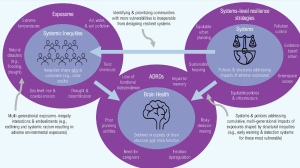
Researchers are now leveraging the idea of the “exposome”—the sum of environmental exposures an individual experiences across their lifetime—to offer a more holistic lens to brain health. For example, Legaz and colleagues (2025) propose an exposome framework that combines both social factors (e.g., education quality) and physical factors (e.g., air pollution) and connects them to brain outcomes measured with tools such as MRI (as shown by Canning et al., 2025). Legaz and colleagues’ framework highlights how systemic inequities—structures that promulgate an unequal distribution of resources and opportunities in communities—shape the pathways of brain aging. For instance, they report that greater structural inequities are associated with adverse brain outcomes, such as lower brain volume and reduced connectivity among different brain regions, and these outcomes have negative impacts on our cognitive abilities. These impacts are magnified in older adults and those living with dementia. We refer the reader to Legaz et al. for a descriptive figure of this model.

The takeaway for an exposome-informed approach for brain health over the life course

Taking an “exposome” approach means putting environmental justice at the center of studying brain health over the life course. Marginalized communities—often low-income or racially maligned—face the highest exposure to environmental risks while having the least resources to cope. As Legaz and colleagues (2025) emphasize, addressing this imbalance is both ethically imperative and essential to people’s health and wellbeing. Solutions include expanding equitable access to restorative green spaces (Besser et al., 2023), enforcing clean air and water quality standards in underserved areas, and investing in community-led initiatives. Implementing such steps would reduce harmful exposures, build community-level resilience, and promote brain health equity for all.

As air pollution, toxic environmental exposures, and climate change converge with a rapid increase in the global population of older adults (GBD Lancet 2022), we are at a critical juncture: such convergence demands a fundamental rethinking of how we understand and protect brain health across the life course.

Continue reading

Daily Temperature Data Processing and Analysis: An Example for New York City

Daily Temperature Data Processing and Analysis: An Example for New York City

Link to code

Click here

Date: September 2025


Authors/Creators/ Team Members: 

Author: Selen Ozdogan

Team Members: Frank Heiland, Deborah Balk, Jennifer Brite, Peter Marcotullio

Specific purpose of code:

This code aims to provide a comprehensive guide to acquiring and cleaning daily temperature and precipitation data for New York City between 2015-2022 using two primary data sources: Global Historical Climatology Network daily (GHCNd) from the U.S. National Centers for Environmental Information and ERA5-Land Reanalysis from the European Union’s Copernicus Project.

From these data sources, the code assembles daily air temperature and precipitation. It also calculates wet bulb temperature and creates temperature exposure variables with varying temporal resolutions. The extent of this example is New York City (NYC). Aggregation of the input data is necessary to generate estimates for all NYC.  

The code is embedded in an R Markdown pdf file.

General Application:

This is a guide to obtaining climate data and creating different temperature measures and temporal exposure lags. With minor tweaks, the code could be used for other locations/time-periods and can be merged with any daily data set for data analysis. Note that our example here is from 2015-2022, but that time period can be extended (as we also did in the underlying research); a short time period is given in this R Markdown package to facilitate the demonstration.

How does or could this code allow researchers to assess research questions related  to aging or life course?:

The output from this code, daily climate data, could be merged with any daily (or more aggregated temporal frequency) data to study the impact of extreme weather events on aging populations, so long as the underlying spatial resolution of the climate data and population data (from either administrative, census or survey data) are spatially and temporally compatible.

Data sets used: 

  • Climate, weather, disaster or environment data:

    Global Historical Climatology Network daily (GHCNd) – point location format.

    ERA5-Land Reanalysis data – grid format

  • All data are publicly available

Links to data:

  1. Global Historical Climatology Network daily (GHCNd)
  2. Climate Data Store

Coding Language:  R, Python

Tools and Packages used:

R: tidyverse, lubridate, magrittr, here, sf, raster, exactextractr, openxlsx, fixest, slider

Python: os, cdsapi, time, Path

Output(s): Dataset

Spatial extent: New York City (roughly 300 sq. miles or 778 sq. km.)

Temporal extent: 2015-2022

Comments: Replication package for the Demography article will be available here. 

Published papers that use this code:

Forthcoming paper “Extreme Weather and Mortality of Vulnerable Urban Populations:  An Examination of Temperature and Unclaimed Deaths in New York City”, in Demography (2026).

Link to PAA Poster

Related Content: 

Demonstration Project: Impact of Extreme Weather on Hard-to-Capture, Vulnerable Populations: Evidence from Hart Island — New York’s Public Burial Ground

Seminar: Measuring Extreme Temperatures and Thermal Comfort in Aging and Demographic Reseach 

Continue reading

Linking SVRGIS with FEMA Disaster Declarations and Census/ACS

Linking SVRGIS with FEMA Disaster Declarations and Census/ACS

Link to code

Click here

Date: September 2026


Author/Creator: Amy Read

Specific purpose of code: This code provides examples of how to pull, filter, and merge data from the NOAA/NWS Severe Weather GIS Database (SVRGIS), OpenFEMA Disaster Declarations Summaries, and data from the Decennial Census and American Community Survey (ACS). Walkthroughs are provided for A) merging FEMA disaster declarations to SVRGIS tornado paths data based on incident date and location, B) performing a spatial join between event paths and Census geographies (intersection of line and polygon) to identify geographic areas that were exposed to tornadoes, hail, and/or wind during the user-specified timeframe.

General Application: This template can be extended to access and merge other OpenFEMA datasets based on incident (such as Public Assistance or Individual Assistance summary data), and any other data on Census geographic boundaries that is of interest to the researcher. This code also allows the user to identify FEMA disaster declarations for tornado events at smaller geographic levels (tracts, block groups, etc.).

How does or could this code allow researchers to assess research questions related  to aging or life course?: This code could be used with any of the ACS/Census data subset by age group. Since this code focuses on the spatial join between tornado/wind/hail event paths and Census geographies, any other demographic/health datasets tracked by state, county, tract, block group, etc. could be merged by FIPS code into these data the same way one would combine them with Census data alone.

Data sets used: 

  • Population, socioeconomic, or health data: Decennial Census, ACS
  • Climate, weather, disaster or environment data: SVRGIS (Tornadoes, Wind, Hail) and FEMA Disaster Declarations Summaries

Are all the data publicly available or are some restricted-access? All are publicly available.  

Links to data:

Coding Language:  R 

Tools and Packages used: tidycensus, rfema, sf, tidyverse

Output(s): Merged dataset saved to .Rds format

Spatial extent: Contiguous United States

Temporal extent: Example focuses on 2000-2010 but explains how to filter/extend beyond that. SVRGIS data is available from 1950 for tornadoes and from 1955 for hail and wind. FEMA disaster declarations are available from 1953. 

Comments: This is a revised, streamlined, and more generalized version of the code used for the manuscript below. That code is also available on the author’s GitHub.

Published papers that use this code: Read, A. (2025). Repeated disaster and the economic valuation of place: Temporal dynamics of tornado effects on housing prices in the United States, 1980–2010. Population and Environment, 47(3), 29. https://doi.org/10.1007/s11111-025-00502-w

Continue reading