Author: Tania Ochoa

Blog template

What am I Reading?

Pollution, Cognitive Aging, and How We Measure the Hard to Measure 

June 2025

Post written by Elizabeth Sorensen Montoya, Ph.D. University of Colorado Boulder

Link to article

The relationship between air pollution and negative health outcomes (including mortality), has been well-documented across many disciplines. A bit more recently, researchers have begun to explore how air pollution may also affect cognitive decline. In fact, the Lancet Commission (2020) has identified air pollution as a risk factor for dementia.   

As I’ve been reading recent studies in this space, I’ve been struck not just by the findings, but also by the different approaches researchers use to measure something as invisible and transient as air pollution, and something as complex as cognition. 

Below, I provide a quick tour of the different approaches used in the studies I’ve been reading: Shaffer et al. (2021), Shi et al. (2022), and Bishop et al. (2023). 

How do we measure exposure? 

Although it would make researchers’ lives easier, air pollution does not respect geographic boundaries and can vary substantially even over small spatial scales.  Given this mobile nature of air pollution, alongside the likely importance of long-term exposure, assigning accurate exposure is difficult. Choosing one measurement strategy over another, of course, comes with tradeoffs.  

While the focus of this post will be on measures of outdoor air pollution, it is important to note the limitations of relying solely on outdoor measures.  People spend the majority of their time indoors, where pollutant levels are estimated to be two to five times higher than outdoor levels (Wallace et al., 1986) due to factors like poor ventilation and indoor sources like cooking and cleaning products. Observing only outdoor exposure—even if at the individual-level—misses an important channel of exposure, resulting in measures that may significantly underestimate true exposure. I explore the growing body of work on indoor air pollution in a future post.  

That said, much of our current understanding of the health impacts of air pollution at scale comes from the use of outdoor, fixed-site pollution monitors. These monitors provide highly accurate and frequent (in many cases, hourly) measurements, but only in certain places and often concentrated in urban and traffic-heavy areas. In low- and middle-income countries, limited monitoring infrastructure makes it difficult to assess air quality consistently, often requiring support from international partnerships. In these settings, air quality monitors are commonly placed at U.S. embassies to help fill gaps in monitoring coverage, though recently the U.S. government has discontinued the public sharing of these data. 

While using fixed-site monitor data can improve accuracy, it can also limit the study population and introduce endogeneity. Monitors may be disproportionately located in areas where air pollution has historically been a problem, or in areas with specific demographic characteristics. These characteristics, like income, race, or education, can also influence cognitive outcomes throughout one’s life course, making it harder to separate the true effect of pollution from these other confounding factors.  

Some studies attempt to address this by augmenting monitor data with more individualized measures of exposure. Shaffer et al. (2021), for instance, leverage the Adult Changes in Thought cohort study, a longitudinal study of adults aged 65 and older in Seattle, which placed low-cost air pollution sensors in participants’ homes. Using these individual-level measures, they find that increases in long-term exposure to PM2.5 are associated with a substantial increase in dementia diagnoses. While this approach enhances spatial resolution and better captures individual-level exposure, it is typically constrained by geography and sample selectivity, potentially reducing generalizability.  
 
Of course, few studies will have the resources to place monitors in individual homes, but there are other ways to leverage the more publicly available fixed-site monitor data. Bishop et al. (2023) take a clever approach that trades some precision for scale and causal identification by coupling monitor data with a quasi-experimental design exploiting the U.S. Clean Air Act’s attainment and nonattainment classifications. Counties that just exceed the federal PM2.5 standard are required to implement pollution controls, while similar counties just below the threshold are not, creating a regulatory discontinuity that serves as a natural experiment.  The authors find that increases in long-term exposure increase the probability of a dementia diagnosis, with effect sizes similar to those reported in Shaffer et al. (2021). While this approach lacks individualized exposure, likely resulting in some measurement error, it offers a strong identification strategy and broad generalizability.  

Another common strategy is to use modeled or satellite-based estimates of exposure to increase spatial coverage, even in areas lacking ground monitors.  Shi et al. (2022) use satellite-derived models to estimate long-term PM2.5 exposure across the entire United States, producing complete spatial coverage and allowing them to link pollution estimates to cognitive outcomes in large, nationally representative samples. Like the other studies, they find that increases in long term exposure increase the likelihood of a dementia diagnosis.  

The use of these satellite data makes it possible to study massive populations—even at a global scale. However, like other strategies, this approach comes with tradeoffs: modeled data are less precise than observed pollution levels from monitors and depend on assumptions about how pollution moves through time and space. These assumptions, though grounded in environmental science, can still introduce error. Further, resolution varies by product, typically ranging from 1 to 10 kilometers. In general, there is a trade-off between spatial detail and global or temporal coverage: finer-resolution data require more satellite observations and greater computing power.  

The tradeoffs between precision and coverage are not only limited to the sources of exposure measurement, but also to how it is defined. You may have noticed that that each of the referenced studies considers “long-term” exposure, but each defines and calculates this somewhat differently: Shaffer et al. use a 10-year moving average; Bishop et al. use a decadal cumulative measure; and Shi et al. use up to 17 years of annual averages. While these approaches are well-suited to capturing chronic exposure patterns, they may miss the impact of acute, high-concentration pollution events, which may also present health consequences. For example, extreme events like wildfires or large industrial accidents will be smoothed out in long-term averages, making it difficult to isolate their effects. While the existing body of literature points to long-term exposure as a key risk factor for cognitive decline, short-term, high-intensity events may also play an important role. 

How do we measure cognition? 

Just as there’s no single way to measure exposure, there are multiple ways to measure cognition. Studies differ in how they define cognitive decline, and these differences, just as with differences in exposure measurement, present their own set of tradeoffs. 

From my own reading (which is certainly not exhaustive), it appears that there are two primary ways of measuring cognitive outcomes: administrative data—such as Medicare claims which rely on physician diagnoses recorded using ICD codes, and standardized cognitive assessments (like those conducted in the Health and Retirement Study).  

Shi et al. (2022) and Bishop et al. (2023) both use Medicare claims data, allowing them to study large populations over time. The tradeoff, of course, is that these records may represent only the more severe stages of cognitive decline and may miss early cognitive changes that impact quality of life. These data may also leave out people with lower access to medical care, raising concerns about who is and is not observed.  

Shaffer et al. (2021), on the other hand, rely on longitudinal cognitive assessments conducted by the Adult Changes in Thought study. While the authors use scores from these assessments to assign dementia diagnoses based on a clinical threshold, these or similar data could also be used to explore cognitive changes that occur below the diagnostic threshold, offering a more comprehensive picture of the impact of air pollution on cognition.  However, such cognitive testing is limited to smaller samples.  

Putting it together 
 
Across all these approaches, the trade-off so familiar to environmental and health researchers is clear: increased precision often comes at the cost of generalizability—and a literal cost, requiring funding, personnel, and typically resulting in smaller sample sizes. Conversely, approaches that maximize sample size and generalizability often sacrifice precision and nuance. But each strategy can teach us something different. It shapes what we see and who we see. Studies using fixed monitors or administrative data can cover large populations over long periods but may miss or over-represented people with certain demographic characteristics or fail to consider potential heterogeneous effects. Clinical assessments of cognition offer detailed insights into cognitive change but are limited in sample size and often the length of the period of study. Each approach reveals a different component of the relationship between air pollution and cognition, and the fuller picture emerges when we consider these components together.  

Despite the different measurement strategies and disciplinary approaches of the cited studies, a pattern emerges: air pollution exacerbates cognitive decline. As someone trained in economics but working alongside sociologists and public health scholars, I find this convergence compelling. It also reminds me that how we measure things—what we see and what we miss—shapes the kinds of solutions we imagine. I think this insight itself calls for more interdisciplinary work on this subject—work that CACHE is here to support.  


References:  

Adebayo, T. and Arasu, S. (2025) ‘Scientists raise concerns as the US stops sharing air quality data from embassies worldwide’, AP News, 5 March. Available at: https://apnews.com/article/us-air-quality-monitors-8270927bbd0f166238243ac9d14bce03 

Bishop, K.C., Ketcham, J.D. and Kuminoff, N.V., 2023. Hazed and confused: the effect of air pollution on dementia. Review of Economic Studies, 90(5), pp.2188-2214. 

Livingston, G., Huntley, J., Sommerlad, A., Ames, D., Ballard, C., Banerjee, S., Brayne, C., Burns, A., Cohen-Mansfield, J., Cooper, C. and Costafreda, S.G., 2020. Dementia prevention, intervention, and care: 2020 report of the Lancet Commission. The Lancet, 396(10248), pp.413-446. 

Shaffer, R.M., Blanco, M.N., Li, G., Adar, S.D., Carone, M., Szpiro, A.A., Kaufman, J.D., Larson, T.V., Larson, E.B., Crane, P.K. and Sheppard, L., 2021. Fine particulate matter and dementia incidence in the adult changes in thought study. Environmental Health Perspectives, 129(8), p.087001. 

Shi, L., Zhu, Q., Wang, Y., Hao, H., Zhang, H., Schwartz, J., Amini, H., van Donkelaar, A., Martin, R.V., Steenland, K. and Sarnat, J.A., 2023. Incident dementia and long-term exposure to constituents of fine particle air pollution: A national cohort study in the United States. Proceedings of the National Academy of Sciences, 120(1), p.e2211282119. 

University of Michigan. (n.d.) Health and Retirement Study: Cognition Data. Available at: https://hrs.isr.umich.edu/data-products/cognition-data 

Wallace, L.A., Pellizzari, E.D., Hartwell, T.D., Whitmore, R., Sparacino, C. and Zelon, H., 1986. Total Exposure Assessment Methodology (TEAM) Study: personal exposures, indoor-outdoor relationships, and breath levels of volatile organic compounds in New Jersey. Environment International, 12(1-4), pp.369-387. 


Learn more

Continue reading

What Am I Reading: Frameworks on Climate, Health, and Aging

What am I reading? Frameworks on Climate, Health, and Aging

Link to article

If you’re interested in contributing a short What Am I Reading post, we’d love to hear from you! Email us at cache@colorado.edu.

Written by Jenna Tipaldo, CUNY School of Public Health and CUNY Institute for Demographic Research, jenna.tipaldo09@sphmail.cuny.edu

Frameworks, tools that can be used to inform research and develop interventions, can help conceptualize scientific problems and visualize complex relationships between factors that influence health. In the past several years, several new frameworks have been developed regarding the interactions between environmental factors such as climate change and health, paying special attention to the impacts on an aging population. Malecki et al. (2022) and Tipaldo, Balk & Hunter (2024) present more general frameworks regarding how environmental, social, and biological factors interact to influence the health of aging populations focusing on disease and adverse health outcomes, while Prina et al. (2024) also present a general framework based on these factors but expanding on a prior framework of healthy aging. Zuelsdorff & Limaye (2024) focus on how similar factors more specifically impact the risk and health burden of Alzheimer’s disease and related dementias (ADRD).  

The frameworks developed in Zuelsdorff & Limaye (2024) and Tipaldo, Balk, and Hunter (2024) illustrate potential moderating and mediating factors on the pathways from climate-sensitive exposures to health outcomes, with the former honing in on ADRD and the latter considering various conditions and outcomes. Similarly, yet from a different perspective, Prina et al. (2024) consider the many factors and interactions of said factors that contribute to healthy aging, emphasizing positive outcomes for aging individuals facing climate hazards. Taking a different approach, Malecki et al. (2022) build their framework on a traditional toxicological dose-response model to show the development of disease and expand it to show factors that influence vulnerability at different stages. For example, environmental and social factors are theorized to influence hazard and exposure levels while individual-level biological and social factors influence biologically effective dose and effects.  

Interactions and intersections between the various social and environmental factors are explicitly shown in the frameworks of both Zuelsdorff & Limaye (2024) and Tipaldo, Balk, and Hunter (2024), and are also discussed by Malecki et al. (2022). Notably, Zuelsdorff & Limaye (2024) also show policy responses such as adaptation and mitigation in the form of a feedback loop from the built environment to impact climate change, which in turn impacts factors of the built and social environments, interpersonal and individual processes, and biomedical factors. 

While emphasizing the need to better understand mechanisms, these four recent framework papers identify myriad research gaps and directions for future research. Tipaldo, Balk, and Hunter (2024) detail recommended next steps for data collection efforts such as a need for longitudinal studies and studies that investigate cumulative impacts and factors across the life course. This suggestion is echoed by both Prina et al. (2024) and Malecki et al. (2022), which also note how big “–omics” data can be harnessed to enhance understanding. With a scope limited to the U.S., Malecki et al. (2022) call for more holistic research in various populations, and both Prina et al. (2024) and Tipaldo, Balk, and Hunter (2024) extend this by citing a need for more research in low-and-middle income and Global South settings. Together, these papers suggest a need for collaborative research across disciplines and regions to address the complex and pressing challenges faced by older adults due to climate hazards. This speaks to the goals of the 2022 NIH Climate Change and Health Initiative and Strategic Framework, which calls for the development of transdisciplinary efforts at the climate-health intersection (Woychik et al., 2022). 

Importantly, all of these framework papers on climate/environment and aging-related health emphasize the need for research to help inform action. Prina et al. (2024) summarizes from a review of the literature potential strategies for mitigation and adaptation. Zuelsdorff & Limaye (2024) and Malecki et al. (2022) highlight a need to translate research findings into policy and actionable interventions for both practitioners and community members. Tipaldo, Balk, and Hunter (2024) note that systematic studies can help inform effective intervention strategies, building on the need for systematic studies on various climate hazards that is noted by the other framework papers. 

References 

  • Malecki KMC, Andersen JK, Geller AM, et al. Integrating Environment and Aging Research: Opportunities for Synergy and Acceleration. Front Aging Neurosci. 2022;14:824921. doi:10.3389/fnagi.2022.824921 
  • Prina M, Khan N, Akhter Khan S, et al. Climate change and healthy ageing: An assessment of the impact of climate hazards on older people. J Glob Health. 2024;14:04101. doi:10.7189/jogh.14.04101 
  • Tipaldo JF, Balk D, Hunter LM. A framework for ageing and health vulnerabilities in a changing climate. Nat Clim Chang. 2024;14(11):1125-1135. doi:10.1038/s41558-024-02156-2 
  • Woychik RP, Bianchi DW, Gibbons GH, et al. The NIH Climate Change and Health Initiative and Strategic Framework: addressing the threat of climate change to health. The Lancet. 2022;400(10366):1831-1833. doi:10.1016/S0140-6736(22)02163-8 
  • Zuelsdorff M, Limaye VS. A Framework for Assessing the Effects of Climate Change on Dementia Risk and Burden. Gaugler JE, ed. The Gerontologist. 2024;64(3):gnad082. doi:10.1093/geront/gnad082 

Continue reading

Heat, Disability in Older Adults, and Care

Heat, Disability in Older Adults, and Care

Investigators:

Emerson Baptista, Cecilia Conde, Landy Sánchez (PI)

Funding:

NIA R61AG086854 (CACHE). Partial funding from UN-WOMEN for Care Data

Data sources:

    Project Summary:

    Older adults are particularly vulnerable to heat due to age-related physiological changes and chronic health conditions, which can impair the body’s ability to regulate temperature and maintain homeostasis during heat exposure. This increases the risk of heat-related health issues such as heatstroke and cardiovascular events. Less is known about how exposure to extreme heat can exacerbate disabilities in older adults. On the one hand, exposure to heat increases the difficulty older adults in performing daily activities such as handling transportation, feeding themselves, managing finances, and maintaining the household (Ji et al 2024). On the other hand, extreme heat events could negatively affects physical performance in older adults, impacting gait speed, chair-rise performance, and balance, as well as increasing risk of cardiovascular disease. In addition, comorbilities, particular medications and reduced heat-regulating mechanisms can decrease their ability to adapt to higher temperatures.

    Moreover, while social networks and available care can reduce the heat-related dissability progression, people with disabilities tend to have lower social capital than individuas withouth dissabilities. In Mexico, the vast majority of older adult care is provided by family members, but that is changing due to changes in the population structure and family arregements. Those changes are making formal care more relevant for older adults than in the past. 

    This project seek to understand the exposure of older adults to heat extreme in Mexico and assess their vulnerability by disability status and care availability. 

    1. We evaluate the extreme heat risk for older adults by disability condition, considering sex and age
    2. We estimate future changes in exposure by projecting disabilities under two distinct climate scanerios (2020-2050)
    3. We analyze present and future care needs for older adults under different scenarios of climate and disability projections

    On the creation of the weather variables:

    For present conditions we construct a daily and hourly record of mean and maximum of Universal Thermal Comfort Index (UTCI) and temperature and humidity records by municipality in Mexico (between 1980 and 2024). For future conditions, we estimate expected temperatures under two different climate scenarios (RCP 8.5 and 6.5). Those weather and climate variables are integrated with disability estimations by municipality by type, cause and age.

    Outputs:

    • Estimations of older adult risks to extreme heat events by disabilities condition in Mexico
    • Adjusted measures of thermal comfort indexes
    • Suggested adaptation measures in the care system for older adults given climate scenarios

    Products:

      • Two papers, two conferences presentation, two teaching materials and one policy summary

      Continue reading

      Test

      The multi-faceted, publicly-available disaster data platform from the Federal Emergency Management Agency (FEMA)

      About:

      OpenFEMA is the “agency’s data delivery platform which provides datasets to the public in open, industry standard, machine-readable formats. Datasets are available in multiple formats, including downloadable files and through an easily digestible Application Programming Interface (API). Each page includes information about the specific dataset, links to downloadable files, a data dictionary describing each field, and an endpoint link (if applicable for those datasets available via the API).”

      Data are available on:

      Disasters: declaration denials; disaster declaration summaries; FEMA web declarations; FEMA web disaster declarations; FEMA web disaster summaries; mission assignments.

      Emergency management: annual NRIRS public data (National Fire Incidence Reporting System); emergency management performance grants; IPAWS archived alerts; national household survey; non-disaster and assistance to firefighter grants; Disaster Relief Appropriations Act of 2013 (Hurricane Sandy)

      Individual assistance: FEMA assists individuals and households through the coordination and delivery of Individual Assistance (IA) programs. IA includes a number of programs, including the Individuals and Households Program (IHP) which is comprised of Housing Assistance (HA) and Other Needs Assistance (ONA). 

      • Data include: housing assistance program data (owners and renters); large disasters registration intake and household program.

      Public assistance: Public Assistance (PA) is FEMA’s largest grant program providing funds to assist communities responding to and recovering from major declared disasters or emergencies.

      • Data include: Public Assistance Applicants; Public Assistance Applicants Program Deliveries; Funded Project Details; Funded Projects Summaries; Grant Award Activities; Second Appeals Tracker

      Hazard mitigation: Hazard Mitigation Assistance (HMA) is for actions taken to reduce or eliminate long term risk to people and property from natural disasters.

      • Data include: Assistance Mitigated Properties; projects; grant program; disaster summaries; mitigation plan statuses, communities; transactions; and more

      National Flood Insurance Program (NFIP) aims to reduce the impact of flooding on private and public structures.

      • Data include: NFIP reinsurance placement information; community layer; redacted claims and policies; status

      Misc

      • FEMA regions; Datasets; Fields

      Continue reading

      How Do Extreme Environmental Events Impact Cognitive Health Among Older Adults?

      How do Extreme Environmental Events Impact Cognitive Health among Older Adults?

      Investigators:

      Drs. Jessica Finlay, Yue Sun, and Michael Esposito

      Funding:

      NIH/NIA R00AG075152, NIH/NIA P30AG066613, and NIH/NICHD P2CHD066613

      Data sources:

      Spatial coverage:

      The United States

      Temporal coverage:

      2000-2022

      Measures:

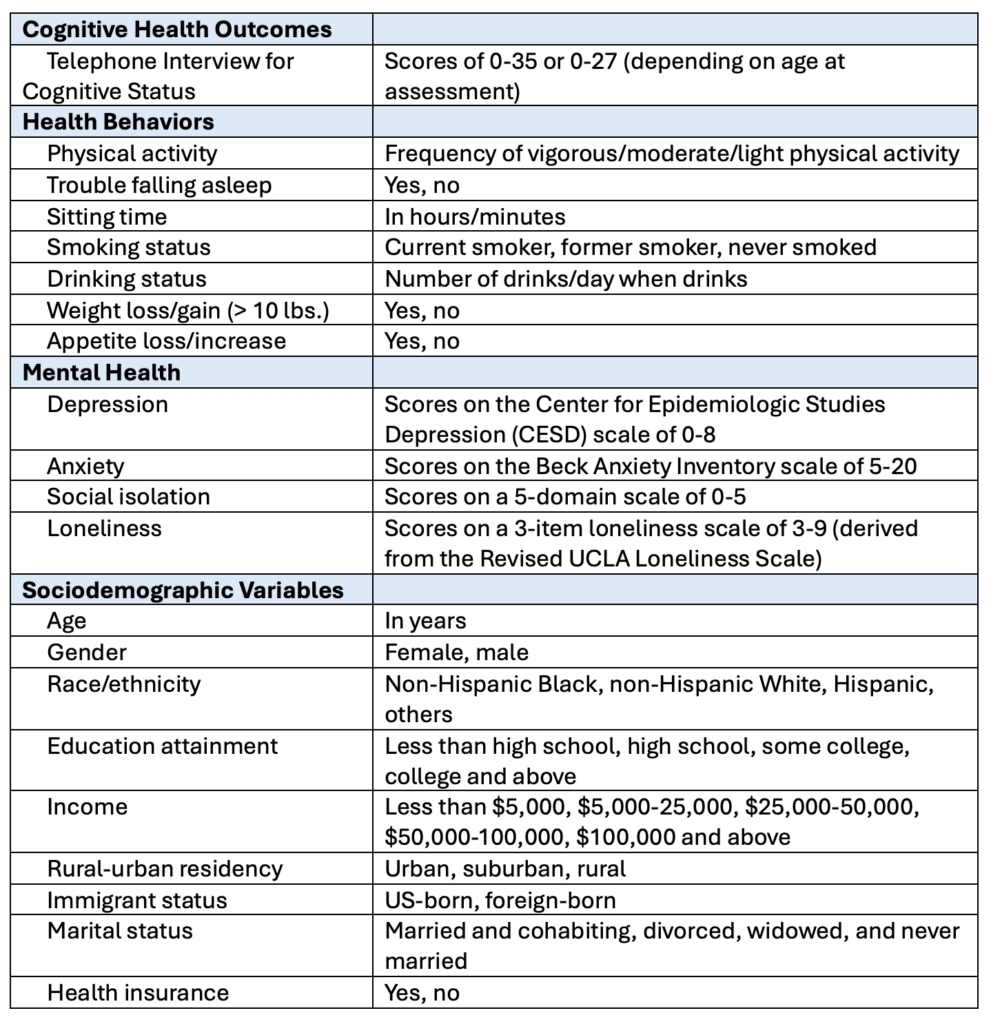
      • Health Measures: Cognitive function, physical activity, sleep, sitting time, smoking, drinking, weight loss/gain, appetite loss/increase, depression, anxiety, social isolation, loneliness
      • Individual and area-level sociodemographic measures:
        • Age, gender, race, ethnicity, education, income, and rural-urban residency
        • Population density, population living below the poverty line, proportion of non-Hispanic Black residents, proportion of owner-occupied housing units
      • Climate Measures: Extreme environmental events (e.g., floods, hurricanes, wildfires)
      • Neighborhood Environment Measures: Parks, recreation centers, eateries, grocery stores and markets, stores, civic and social organizations, religious organizations, arts and cultural sites, libraries, and educational sites

      Project Summary:

      In an era of ever-increasing climate hazards, it is critical to understand how extreme environmental events such as wildfires, floods, and hurricanes may increase risk for Alzheimer’s Disease and Related Dementias (ADRD). This project examines how extreme environmental events are associated with cognitive health among older Americans. Beyond direct biological risks such as pollution exposures, extreme events also disrupt daily routines and community networks to pose dementia risks through social and behavioral pathways. Moreover, the effects of extreme events on cognitive health and related health behaviors may vary person and place-based characteristics such as income, race/ethnicity, rurality, and social infrastructure sites (e.g., libraries, community centers, civic/social organizations) that provide support, connection, and informal care.

      We will investigate cognitive trajectories following exposure to an extreme event, as well as relevant behaviors that support brain health such as exercise, diet, smoking, and stress.

                        This project will use the nationally representative Health and Retirement Study (HRS) combined with built and natural environmental data to address these research questions. Specifically, it links HRS participants to extreme environmental events from the FEMA National Risk Index and the Spatial Hazards Events and Losses Database, as well as built environmental data from the National Neighborhood Data Archive. Findings will advance understanding of how extreme events may impact cognitive health in later life, as well as person-place variations in these associations. This project will inform community interventions and targeted programs to support individual and community recovery and long-term health following an extreme environmental event.

      Comments:

      The HRS contains detailed longitudinal measures of cognitive health. It is therefore a robust data source to examine trajectories of cognitive health over time. A restricted HRS data agreement is required to access the geographic information of respondents at the state, county, and Census tract level.

      Table 1. Core Variables from the Health and Retirement Study

      On the creation of the weather variables:

      FEMA National Risk Index data are provided at the census tract level. This index covers 18 specific hazard types: avalanche, coastal flooding, cold wave, drought, earthquake, hail, heat wave, hurricane, ice storm, landslide, lightning, riverine flooding, strong wind, tornado, tsunami, volcanic activity, wildfire, and winter weather. The database has both overall risk index for all hazard types and risk indices for individual hazards. We will use numerical scores of overall index and individual indices directly.

      Spatial Hazards Events and Losses Database data are at the county level. It covers the same hazards as FEMA National Risk Index. We will use some measures, including count of people killed, count of people injured, and damage to property in adjusted U.S. dollars.

      Outputs:

      Peer-reviewed publications, conference presentations, grant proposals

      Continue reading

      Impact of Extreme Weather on Hard-to-Capture, Vulnerable Populations: Evidence from Hart Island — New York’s Public Burial Ground

      Impact of Extreme Weather on Hard-to-Capture, Vulnerable Populations: Evidence from Hart Island — New York’s Public Burial Ground

      Investigators:

      Frank W. Heiland, Deborah Balk, Selen Ozdogan, Jennifer Brite, Peter Marcotullio and Christian Braneon

      Funding:

      NIAID R03 Grant AI166809-01, NIA R61AG086854 (CACHE)

      Data sources:

      • Daily Unclaimed Death Records: The burial records from Hart Island, New York City’s public cemetery located on an island near the Bronx in the Long Island Sound, are publicly available through a searchable online database named Hart Island Lookup Service (New York City Department of Correction, 2024). We scrape the data between 1977 and 2022 for the present study. The Hart Island records include exact date of death (day-month-year) and, for most records, first and last names, age at death, sex (male/female/unknown), and place of death (homes, residential care facilities, hospitals or on the street). A small number of records are available before 1977, but the counts suggest the data are not complete and were therefore excluded. On Hart Island, graves are numbered and organized in sections within plots. For bodies buried on Hart Island in more recent years the records typically also include a medical examiner case number, which reveals information about the location at death (Heiland et al., 2023; New York City Department of Correction, 2024). There have been very few child burials on Hart Island since 1977, but there are many records of infants and fetuses. The present analysis looks at adults and children only.
      • Air temperature: The National Oceanic and Atmospheric Administration (NOAA) collects daily weather-station meteorological data in the Global Historical Climatology Network (GHCN) (Menne, Durre, Korzeniewski, et al., 2012). The records for New York City are reliable historically and the data are provided in year-month-day format. We use daily maximum and minimum dry bulb (air) temperature measured at three stations (or point locations) in NYC (LaGuardia airport in northern Queens county, Central Park in Manhattan (New York county), and JFK airport in southern Queens county) in degrees Celsius. We average the temperature extremes over these three locations to obtain the city-wide maximum and minimum for each day and then convert to Fahrenheit for ease of interpretation.
      • Wet bulb temperature: We use the ERA5-Land hourly data (Muñoz-Sabater et al., 2021) to calculate the wet bulb temperature, which measures how warm it feels based on evaporative cooling (i.e. taking air humidity into account). These satellite-based, reanalysis raster-format data indicate hourly temperature and dewpoint in Celsius at a spatial resolution of 0.25 by 0.25 latitude-longitude degrees. Using the underlying variables, we obtain the hourly wet bulb temperature for each grid between 1977 to 2022 and then convert to Fahrenheit. We then temporally aggregate it by calculating the daily maximum and minimum wet bulb temperatures. Then, we spatially aggregate the raster data by retrieving the maximum wet bulb temperature within the boundaries of New York City, obtained from the Borough Boundaries vector data (NYC OpenData, 2024). We call this measure of the maximum value of the daily maximum temperature the “max-max” wet bulb temperature. We obtain the “min-min” in a similar manner.

      Measures:

      • Mortality Measures: Unclaimed death count in New York City since 1977 (daily number of deaths where the body remained unclaimed and was subsequently buried on Hart Island — the City’s public burial ground). Recent research shows the importance of understanding unclaimed and public burial deaths (Brite et al. 2024, Sohn et al. 2020), and to the extent that daily death records are reported, these data are structurally similar to other types of administrative data that indicate daily demographic events.
      • Aging/older adults Measures: Age at death information is available for most adult decedents (the analysis is restricted to persons over age 1 though very few persons under 18 are buried on Hart Island). We create a dichotomous death count measure for population under 65, and 65 and above.
      • Climate Measures: Daily data allow for the construction of measures of temperature and total precipitation so that we can examine the associations between climate and mortality over 50 years among the especially vulnerable. NOAA data allow for measures of air temperature and the ERA5 reanalysis data allow for the construction of a wet bulb measure. We use temperature maximum and minimum rather than average temperatures in the main analysis, in order to isolate the effects of changes in minimum and maximum separately; both are commonly used in the literature (Benmarhnia et al., 2015; Bunker et al., 2016; Weilnhammer et al., 2021)

      Project Summary:

      We examine the association between weather extremes and persons buried in the nation’s largest indigent burial ground—Hart Island, New York, where more than one million unclaimed individuals are interred. Public burial records provide a window into mortality among particularly vulnerable populations. We connect public-burial deaths with extreme temperatures, and precipitation, in first of their kind analyses. This study takes place in two parts.

      In the first part of the analysis, we link New York City daily air and wet bulb temperature patterns for the period 1977-2022 to daily deaths that remain unclaimed and were subsequently buried on Hart Island. We find robust evidence linking peak summer temperatures to unclaimed mortality. On average, a 1-degree Fahrenheit (.556-degree Celsius) higher maximum peak daily air temperature in a 7-day (3-day) summer period predicts 1.2% (1%) more daily unclaimed deaths on day 7 (3), controlling for precipitation and season, year, decade and holiday effects. Further analysis suggests that 5.1% of all extreme heat related deaths were unclaimed city-wide, implying New Yorkers who died due to extreme heat were more than three times as likely to be unclaimed. (The measures based on the weather data indicated above are for this long-term analysis only.)

      In the second part of this analysis (beginning in Spring 2025), we consider the spatial variation in temperatures within New York City, for a more recent time period. That analysis will use measures of temperature based on land-surface temperature as well as air temperature in order to capture variation in the built-environment (Hrisko et al., 2020; Naserikia et al., 2023). Especially for large cities, built-environment features are considered important to understanding how people experience heat. These data will be cross-validated with a set of temperature data collected at schools, public housing campuses and selected other public locations throughout New York City (https://crest.cuny.edu/uHMT/index.html). We will integrate the spatial temperature data with geocoded unclaimed death records from Hart Island and study vulnerability hotspots and periods across New York City neighborhoods.  

      This research highlights the undue burden that climate change places on deeply vulnerable populations, and thus the need to use innovative demographic and climate data with integrated methods to better capture and understand these impacts.

      On the creation of the weather variables:

      Questions and answers supplied here have been excerpted from Heiland et al. 2025 [link forthcoming].

      Q:   Why didn’t we use long-term historical data on extreme heat that is made available by the Centers for Disease Control on extreme heat days and daily maximum summer temperatures for all counties and census tracts?
      A:   The analysis of public burial deaths (on Hart Island) examines daily temperature mins and maxes in all seasons, so we needed data that included all days, and both minima and maximum temperatures.

      Q:   Why did we choose temperature windows of 1-, 3-, 7- and 10-days?
      A:   Evidence from studies on extreme temperatures and mortality and morbidity suggest extreme temperature spells impact with a lag of up to 10 days and differential sensitivity to heat versus cold spells. While extreme temperatures can have immediate health impacts measurable in single-day models, extended exposure periods may produce additional and distinct effects beyond these immediate impacts. The most relevant exposure duration can vary significantly based on factors, such as age, access to temperature control systems, built environment, and local climate. By examining multiple time windows, we can provide sensitivity analysis to the choice of the exposure window but also determine which duration is most significant for understanding temperature effects in the Hart Island unclaimed deaths sample.

      Q:   Why choose both wet bulb and air temperature?
      A:   We examine both wet bulb and air temperature measurements because they capture different aspects of how heat affects human health. While air temperature alone is important, humidity plays a crucial role in how the body experiences and responds to heat. Heat indices like wet bulb measures combine temperature and humidity to indicate human discomfort (Anderson & Bell, 2009; Ashcroft, 2002; Oudin Åström et al., 2015). The body primarily cools itself through sweat evaporation, but high humidity reduces this cooling mechanism’s effectiveness. This is particularly relevant because humans have a physiological limit for heat tolerance at a wet bulb temperature of 35°C (Raymond et al., 2020), and certain populations, especially older adults, have a reduced ability to regulate their body temperature (Brazaitis et al., 2017; Cramer et al., 2022; Meade et al., 2020). Research suggests that there is an upper limit on heat and humidity tolerance for all mammals that could be breached in the future due to climate change (Sherwood & Huber, 2010).

      By analyzing both wet bulb and air temperature measurements, we can assess whether incorporating humidity into our temperature metrics meaningfully affects our findings for the Hart Island population. While previous research emphasizes humidity’s role in heat stress, comparing results using both metrics allows us to determine if this theoretical importance translates to practical differences in mortality patterns in our specific sample. Our analysis reveals that the relationship between temperature and mortality follows similar patterns across both measures, though the air temperature models show slightly stronger associations in magnitude.

      References:

      Adeyeye TE, Insaf TZ, Al-Hamdan MZ, Nayak SG, Stuart N, DiRienzo S, Crosson WL. Estimating policy-relevant health effects of ambient heat exposures using spatially contiguous reanalysis data. Environ Health. 2019 Apr 18;18(1):35. doi: 10.1186/s12940-019-0467-5. PMID: 30999920; PMCID: PMC6471902

      Brite, J., Heiland, F.W. and Balk, D., 2025. Understanding deep disadvantage at the end of life: A nationwide analysis of unclaimed deaths. Social Science & Medicine, 365, p.117551. https://doi.org/10.1016/j.socscimed.2024.117551

      Hrisko et al. (2020). Urban air temperature model using GOES-16 LST and a diurnal regressive neural network algorithm, Remote Sensing of the Environment https://www.sciencedirect.com/science/article/abs/pii/S0034425719305140

      Menne, M. J., Durre, I., Korzeniewski, B., McNeill, S., Thomas, K., Yin, X., Anthony, S., Ray, R., Vose, R. S., Gleason, B. E., & Houston, T. G. (2012). Global Historical Climatology Network—Daily (GHCN-Daily), Version 3 [Dataset]. NOAA National Centers for Environmental Information. https://doi.org/10.7289/V5D21VHZ

      Muñoz-Sabater, J., Dutra, E., Agustí-Panareda, A., Albergel, C., Arduini, G., Balsamo, G., Boussetta, S., Choulga, M., Harrigan, S., & Hersbach, H. (2021). ERA5-Land: A state-of-the-art global reanalysis dataset for land applications. Earth System Science Data, 13(9), 4349–4383.

      Naserikia et al. (2023). Land surface and air temperature dynamics: The role of urban form and seasonality Science of the Total Environment https://www.sciencedirect.com/science/article/pii/S0048969723059338

      New York City Department of Correction. (2024). Hart Island Lookup Service [Dataset].
      https://a073-hartisland-web.nyc.gov/hartisland/pages/home/home.jsf

      NYC OpenData. (2024). Borough Boundaries [Dataset]. https://data.cityofnewyork.us/City-Government/Borough-Boundaries/tqmj-j8zm

      Sohn, H., Timmermans, S. and Prickett, P.J., 2020. Loneliness in life and in death? Social and demographic patterns of unclaimed deaths. Plos one, 15(9), p.e0238348.

      Continue reading

      US County-to-County Migration Flow Data, 1990-2010

      US County-to-County Migration Flow Data, 1990-2010

      Background:

      The Internal Revenue Service’s (IRS) county-to-county migration data are an incredible resource for understanding migration in the United States. Produced annually since 1990 in conjunction with the US Census Bureau, the IRS migration data represent 95 to 98 percent of the tax filing universe and their dependents, making the IRS migration data one of the largest sources of migration data. However, any analysis using the IRS migration data must process at least seven legacy formats of these public data across more than 2000 data files — a serious burden for migration scholars.

      Objective:

      To produce a single, flat data file containing complete county-to-county IRS migration flow data and to make the computer code used to process the migration data available.

      Methods:

      This paper uses R to process more than 2,000 IRS migration files into a single, flat data file for use in migration research.

      Contribution:

      To encourage and facilitate the use of this data, we provide a single, standardized, flat data file containing county-to-county migration flows for the period 1990-2010 and provide the full R script to download, process, and flatten the IRS migration data.

      Continue reading

      Federal Emergency Management Agency (FEMA) Multi-Faceted, Publicly-Available Disaster Data Platform

      The multi-faceted, publicly-available disaster data platform from the Federal Emergency Management Agency (FEMA)

      Updated January 2025


      About:

      OpenFEMA is the “agency’s data delivery platform which provides datasets to the public in open, industry standard, machine-readable formats. Datasets are available in multiple formats, including downloadable files and through an easily digestible Application Programming Interface (API). Each page includes information about the specific dataset, links to downloadable files, a data dictionary describing each field, and an endpoint link (if applicable for those datasets available via the API).”

      Data are available on:

      Disasters: declaration denials; disaster declaration summaries; FEMA web declarations; FEMA web disaster declarations; FEMA web disaster summaries; mission assignments.

      Emergency management: annual NRIRS public data (National Fire Incidence Reporting System); emergency management performance grants; IPAWS archived alerts; national household survey; non-disaster and assistance to firefighter grants; Disaster Relief Appropriations Act of 2013 (Hurricane Sandy)

      Individual assistance: FEMA assists individuals and households through the coordination and delivery of Individual Assistance (IA) programs. IA includes a number of programs, including the Individuals and Households Program (IHP) which is comprised of Housing Assistance (HA) and Other Needs Assistance (ONA). 

      • Data include: housing assistance program data (owners and renters); large disasters registration intake and household program.

      Public assistance: Public Assistance (PA) is FEMA’s largest grant program providing funds to assist communities responding to and recovering from major declared disasters or emergencies.

      • Data include: Public Assistance Applicants; Public Assistance Applicants Program Deliveries; Funded Project Details; Funded Projects Summaries; Grant Award Activities; Second Appeals Tracker

      Hazard mitigation: Hazard Mitigation Assistance (HMA) is for actions taken to reduce or eliminate long term risk to people and property from natural disasters.

      • Data include: Assistance Mitigated Properties; projects; grant program; disaster summaries; mitigation plan statuses, communities; transactions; and more

      National Flood Insurance Program (NFIP) aims to reduce the impact of flooding on private and public structures.

      • Data include: NFIP reinsurance placement information; community layer; redacted claims and policies; status

      Misc

      • FEMA regions; Datasets; Fields

      Continue reading

      Extreme Events and Rural Older Adults

      Extreme Events and the Rural Older Adults

      Investigators:

      Lori Hunter (PI), Catherine Talbot, Helen Wilson-Burns, Dylan Connor

      Funding:

      NIA

      Data sources:

      Measures:

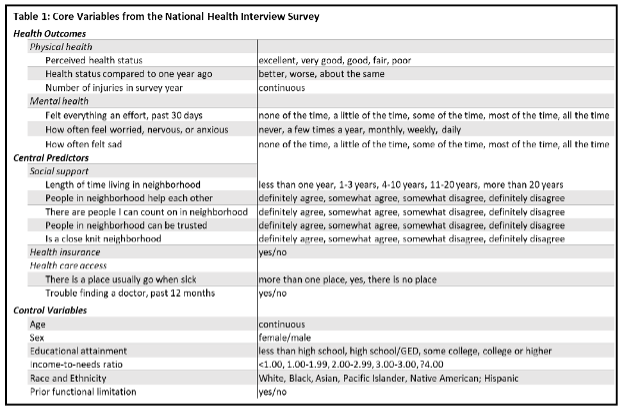
      • Health Measures: Several measures of physical and mental health (table below).
      • Aging Measures: Contrast health outcomes across age groups including 18-64 years and 65 years and over; also disaggregate into subcategories of younger and older individuals (e.g., 18-34, 75+).
      • Climate Measures: Extreme events (FEMA, SHELDUS); precipitation and temperature anomalies; more details below.

      Project Summary:

      This project examines the physical and mental health impacts of extreme environmental events on the elderly, with an emphasis on how these impacts vary across the rural-urban continuum. Extreme environmental events — such as floods, wildfires, and hurricanes — are increasing in frequency and severity (Hayhoe et al. 2018) and rural residents are especially vulnerable given their lower levels of health insurance coverage (Cohen et al. 2021) and lesser access to health care. Physician density is much lower in rural areas (Machado et al. 2021) and ongoing hospital closures mean longer transport times, including for emergency care (GAO 2021). In fact, rural dwellers are already subject to the “rural mortality penalty” in that they already have lower life expectancies compared to their urban counterparts (Miller and Vasan 2021). We combine data on physical and mental health from the National Health Interview Survey, historical weather data, FEMA disaster declarations, and background on the scale and scope extreme environmental events and then link these to indicators of ruralness based on the USDA’s rural-urban continuum. We emphasize the connections between extreme environmental events and health for the rural elderly by contrasting the association for this group with that for younger individuals and urban dwellers. Of additional interest is the potential for social support and connection to be protective. In urban areas, social isolation has been found to play a role in mortality in disasters such as the loss of elderly life in the Chicago heat wave of 1995 (Klinenberg 2015). However, rural areas are characterized by relatively stronger social bonds (Henning-Smith et al. 2019) and we therefore examine the possibility of such connections benefiting the rural elderly in times of disaster. In all, this project provides information important for the development of programs and policies to protect elderly health in the context of rising environmental extremes.

      Comments:

      No locational data are available in the publicly available NHIS and, as a result, restricted data were required in order to integrate the data sources. The restricted data provide county location and the social and environmental data are integrated at the county scale.

      Contrasts across rural and urban areas are central to the project, so we also include the USDA Economic Research Service’s “Rural-Urban Continuum Codes” (RUCC) that include 9 categories with 3 “metro” county classes and 6 “nonmetro” classes. Metro counties are divided into categories according to total population size of the metro area of which they are part, and nonmetro counties are categorized by the size of their urban populations and the county’s adjacency to one or more metro areas.

      On the creation of the weather variables:

      The data are integrated at the county scale, with temperatures and precipitation measures representing the average of values within a county. NOAA’s data are generated from 23,000 weather stations and vetted using National Research Council standards.  Such data allow tremendous flexibility in creation of measures of stress including heat stressors that do not rise to the definition of heat waves (defined by the EPA as at least four days with an average temperature that would only be expected to persist over four days once every 10 years, based on the historical record). Similarly, measures can be created of precipitation anomalies that do not result in floods (defined by FEMA as partial or complete inundation of 2 or more acres or 2 more properties). The research team has made use of such weather data in prior scholarship where anomalies were indicated by 1 or 2 standard deviations from a long term normal (typically 30 years). We use such measures to identify extreme events in addition to the SHELDUS and FEMA disaster data.

      Continue reading